Forest Bike UX Audit & Improvement Plan
Reducing friction in the Riding experience
November 2024
*Disclaimer: I am not affiliated with Forest. This is an independent heuristic evaluation based on personal usage and public user reviews.

Forest is a key player in London's sustainable transport network. However, user reviews suggest that friction during the "End Ride" process and confusion regarding the pricing bundles are causing user frustration. This audit identifies key pain points and proposes UI changes to improve trust and reduce customer support queries.
Table of contents
Project background
Insights & Problem Definition
Recommendations
Conclusion
Project Background
I have been a frequent user of Forest for over six months. While the core service is strong, I noticed recurring usability issues that hinder the experience.
Background on Forest
“The Forest team aim for 90% of their fleet to be available to ride at any time. Damaged bikes need to be assessed, repaired and tested as efficiently as possible.”
“Forest have used a mixed resourcing model where their core team in the workshop is permanent and they supplement it with agency staff when they see increased demand.”
Forest faces a challenge: they need to balance operational efficiency (repairing bikes, managing fleets) with a seamless user experience. Currently, the app prioritises operational rules in a way that sometimes penalises the user.
Insights & Problem Definition
Key Insights & Pain Points Based on my analysis of App Store reviews and personal observation, I identified three main friction points:
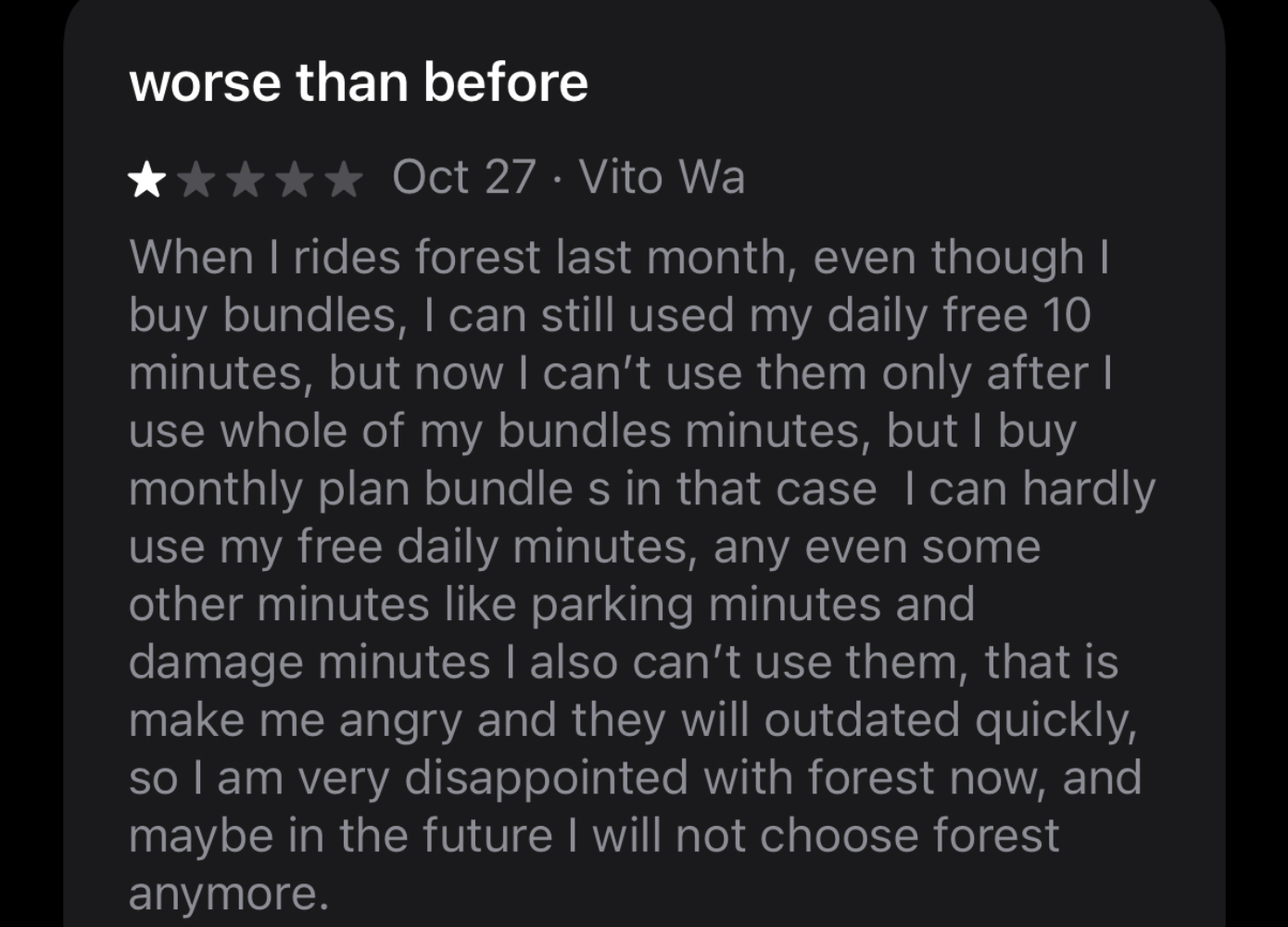
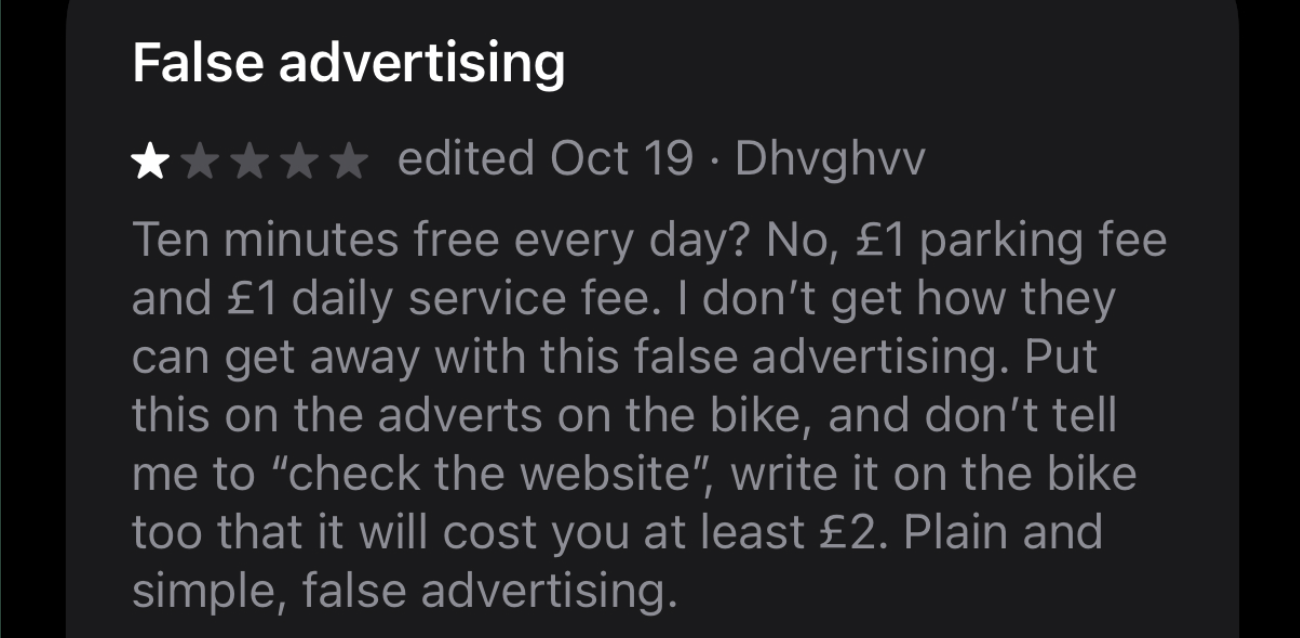
1. Pricing Model Transparency
The Issue: Users are confused by the "10 minutes free" rule versus the unlock fee. The current UI does not clearly show that the unlock fee (£1.90) applies even if the ride is within the free minutes.
The Impact: Users feel misled, leading to negative reviews claiming "hidden charges," even though the pricing is technically accurate.
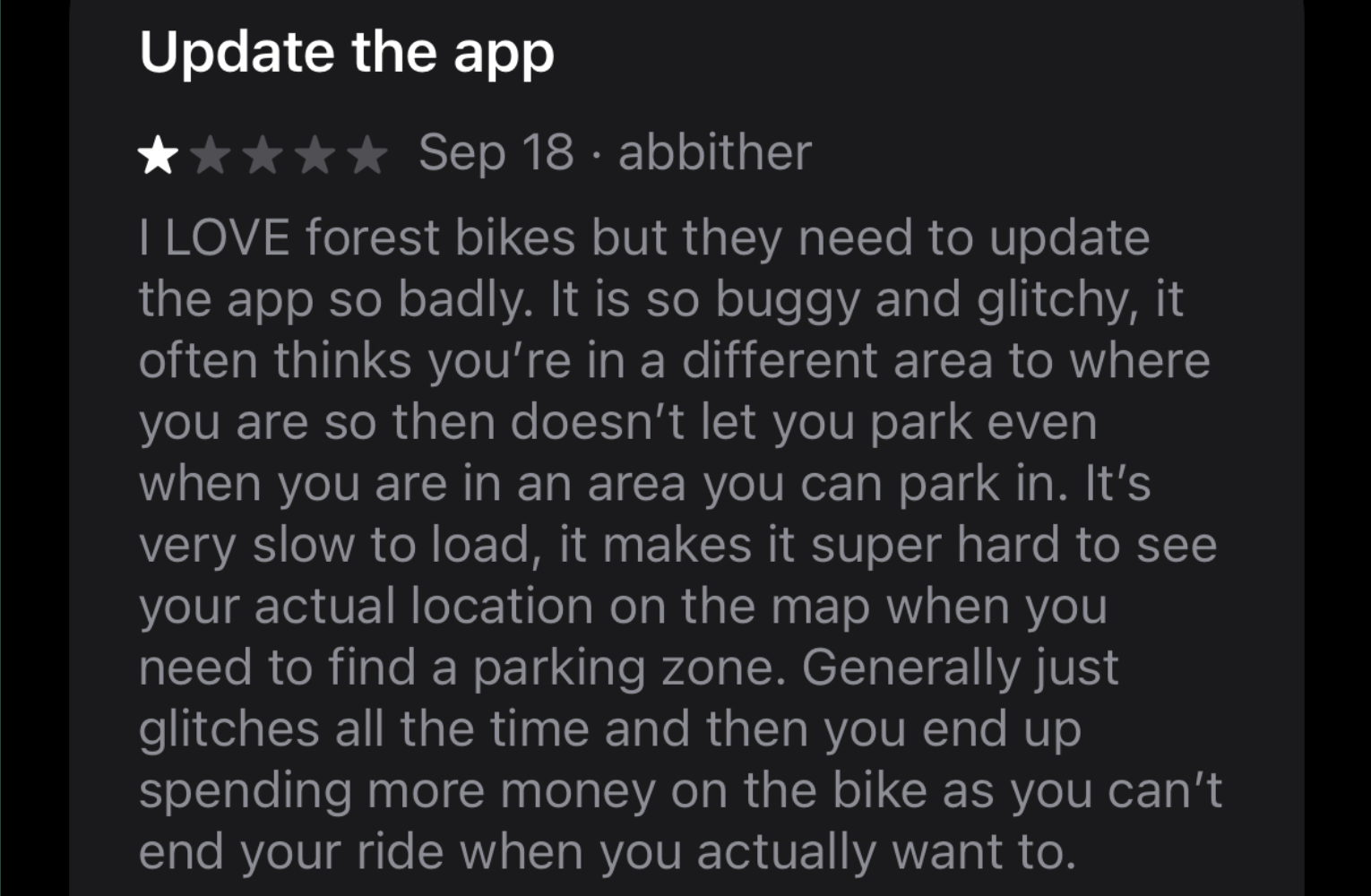
2. The "End Ride" Friction
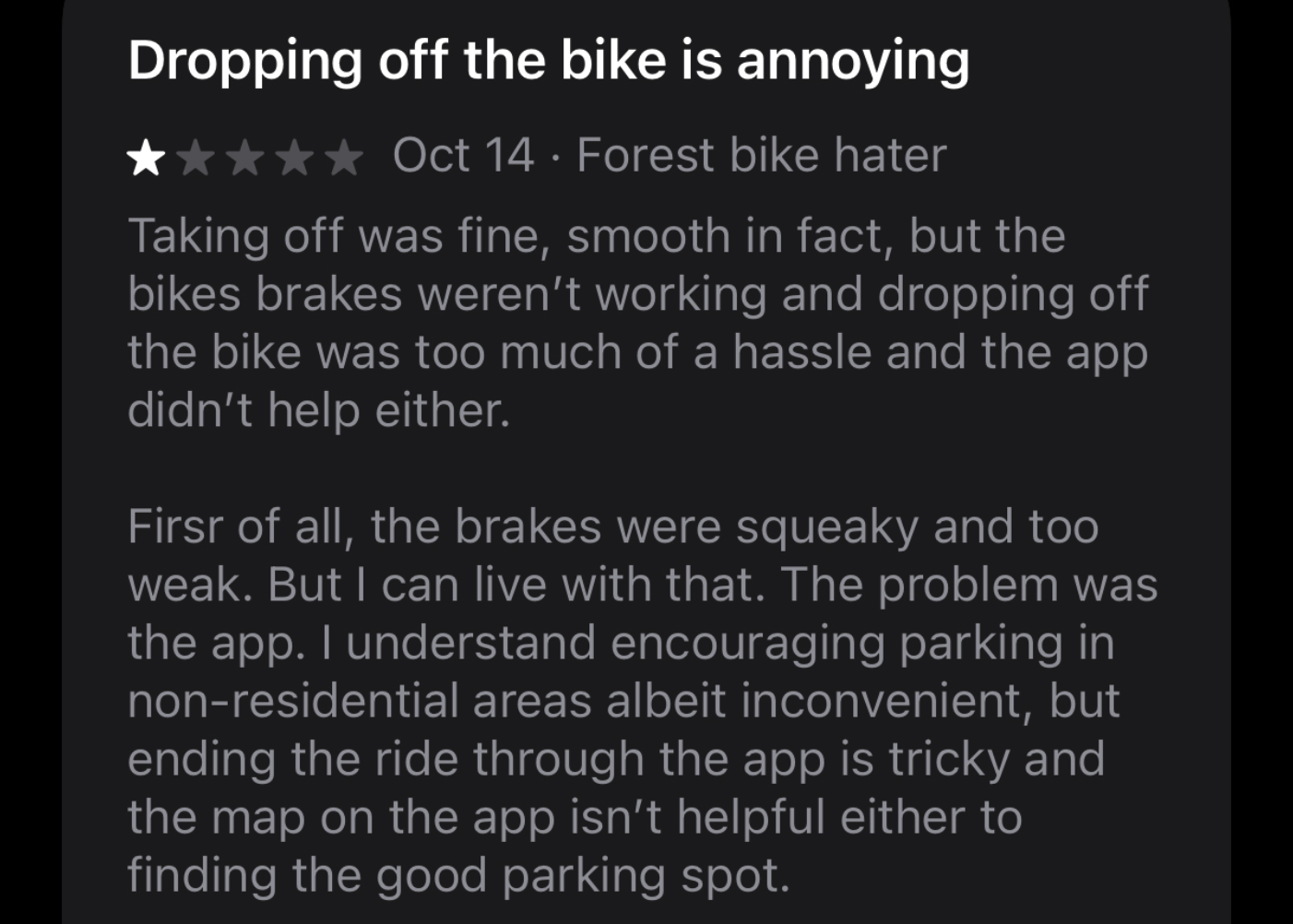
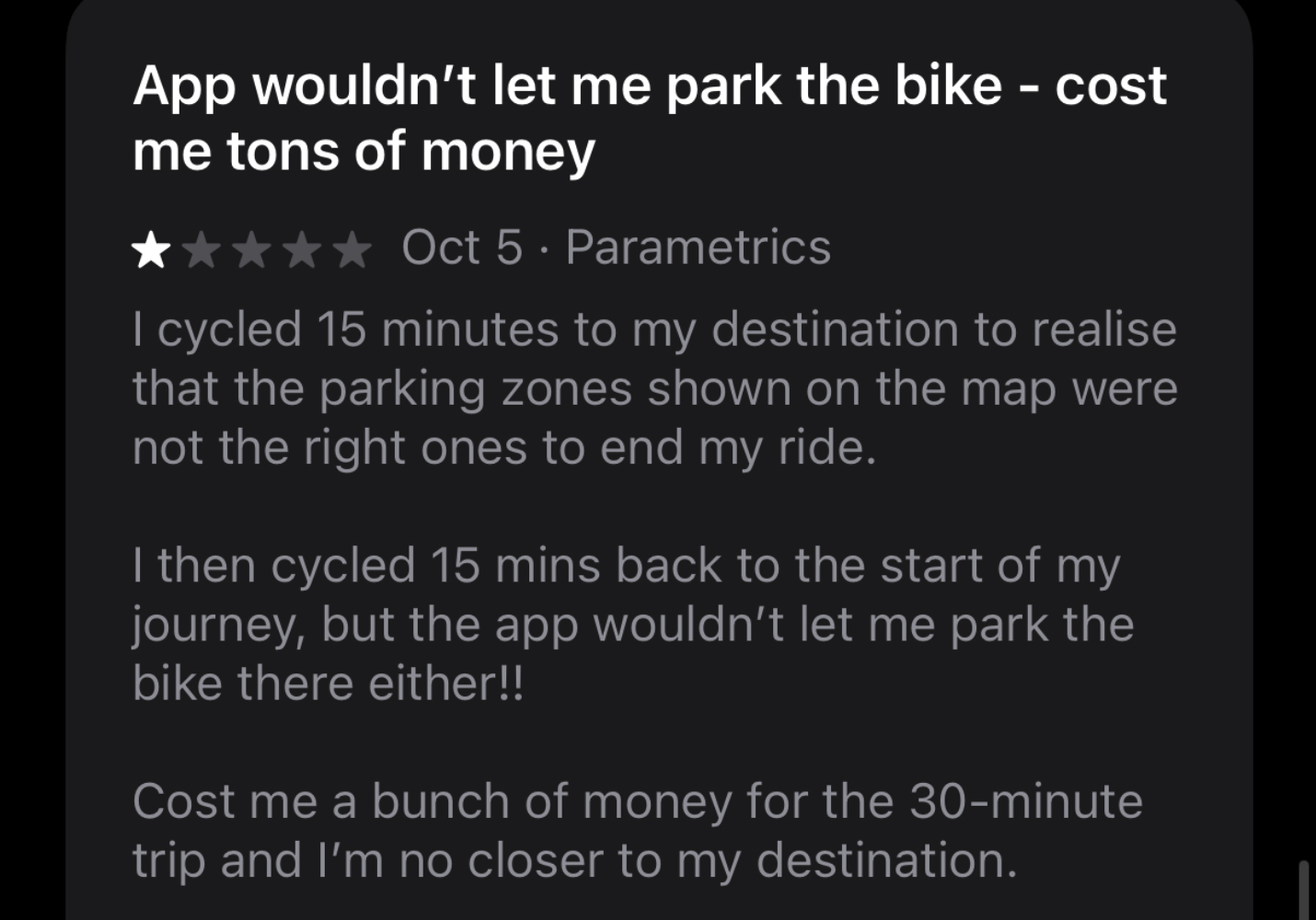
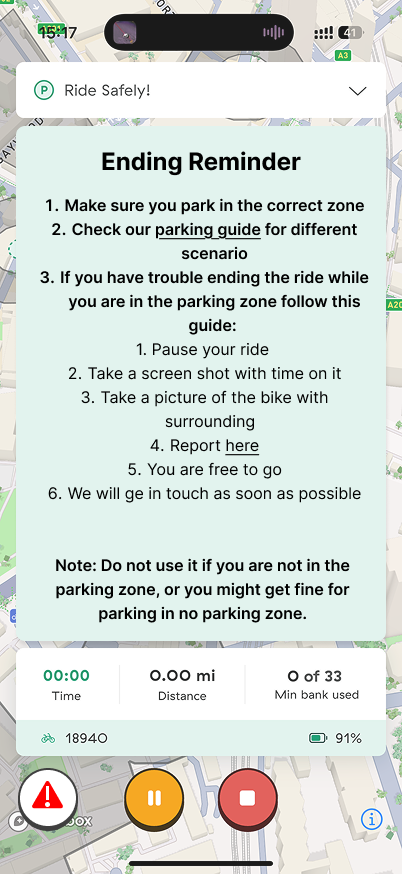
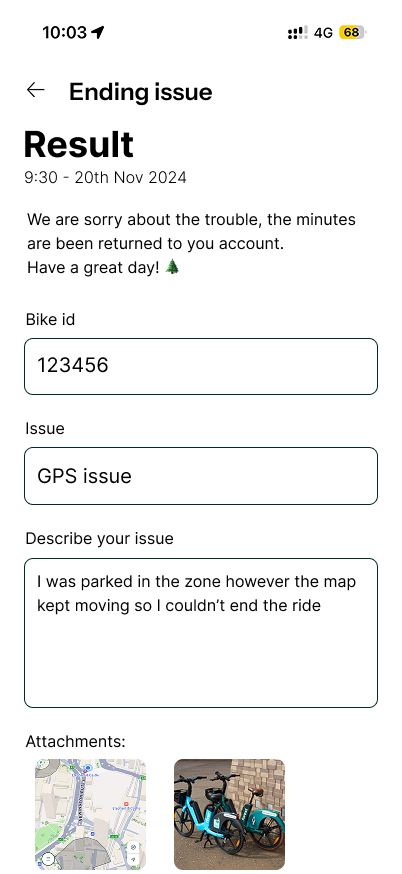
The Issue: GPS drift often prevents users from ending rides even when they are physically in a parking bay.
The Impact: Users are forced to pay for extra minutes while struggling to get the app to recognise their location. This is the #1 cause of anxiety in the user journey.
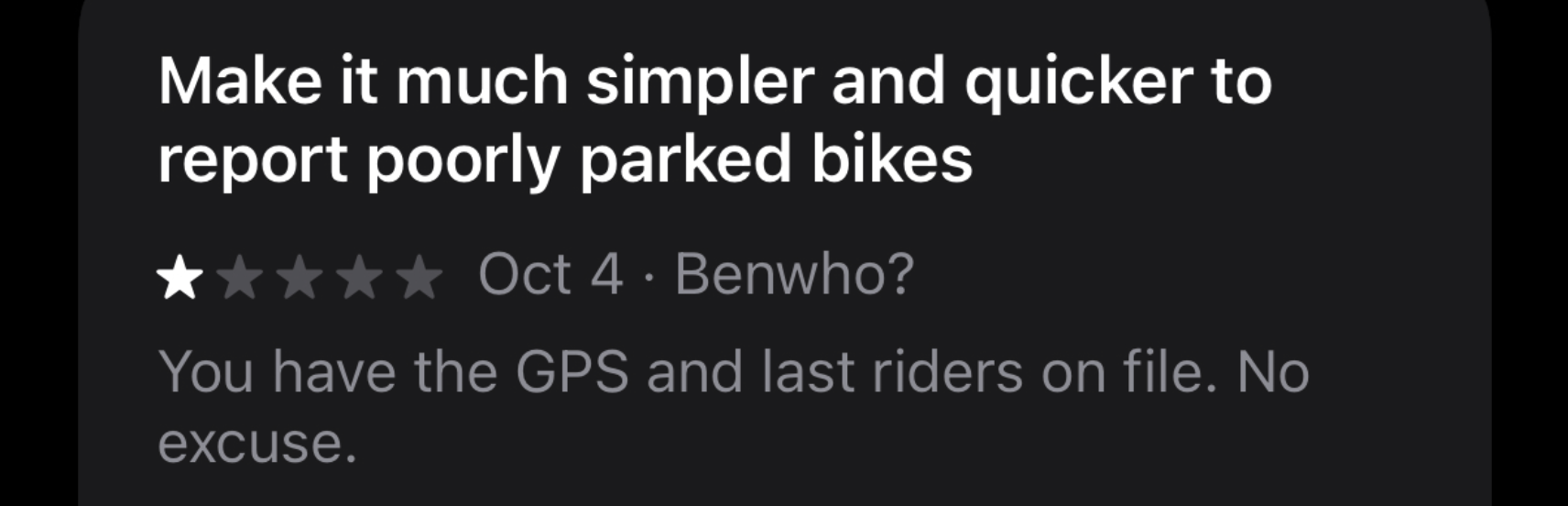
3. Reporting Mechanics
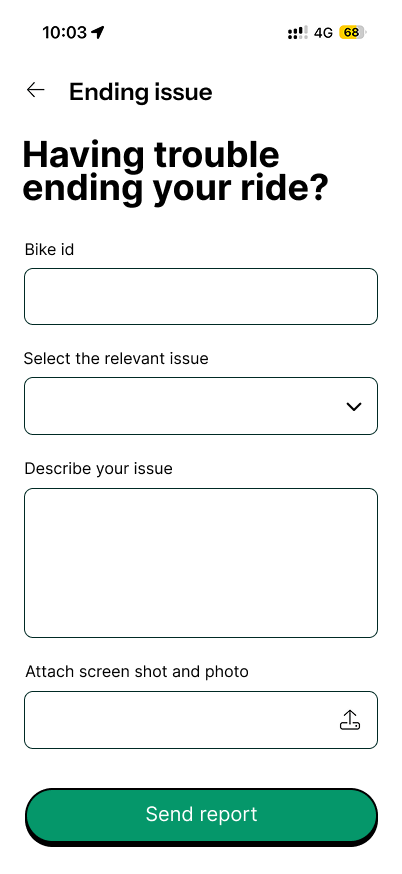
The Issue: Reporting a faulty bike or a parking issue is currently slow and requires too many steps.
The Impact: Because reporting is difficult, users simply skip it. This means Forest receives less data on damaged bikes, slowing down their maintenance operations.
Design Solutions & Recommendations
Recommendations: Clarity in Pricing
Recommendation: Be transparent about the "Unlock Fee."
How: Redesign the ride summary screen to explicitly separate the Unlock Fee from the Ride Time.
Strategy: Instead of vague "10 mins free" messaging, use "First 10 mins ride-time free (Unlock fee applies)." This manages expectations upfront.
Solution 1: The "Safe-End" Feature (GPS Fix)
Recommendation: Reduce user anxiety when GPS fails.
How: Implement a "Pause & Verify" logic. When a user clicks "End Ride," the timer should pause immediately while the system verifies the GPS location and uploads the photo.
Logic:
User clicks "End Ride" -> Timer stops (Billing pauses).
App checks GPS/Photo in the background.
If successful: Ride ends.
If failed: User is prompted to retry, but is not charged for the time spent retrying.
Solution 2: Prevention & Awareness
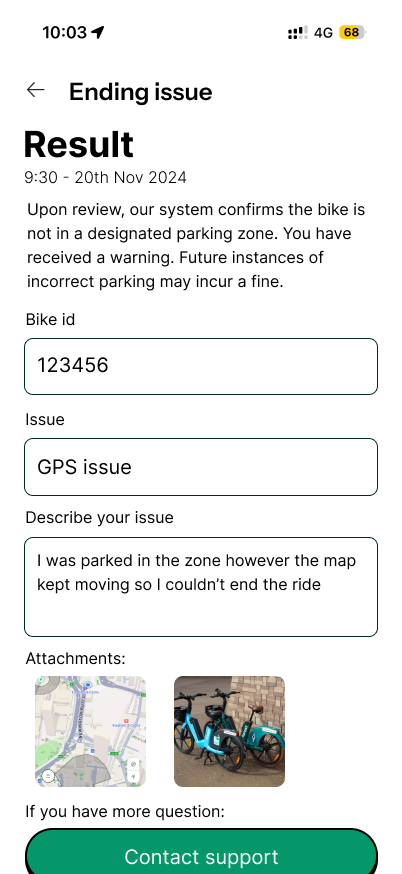
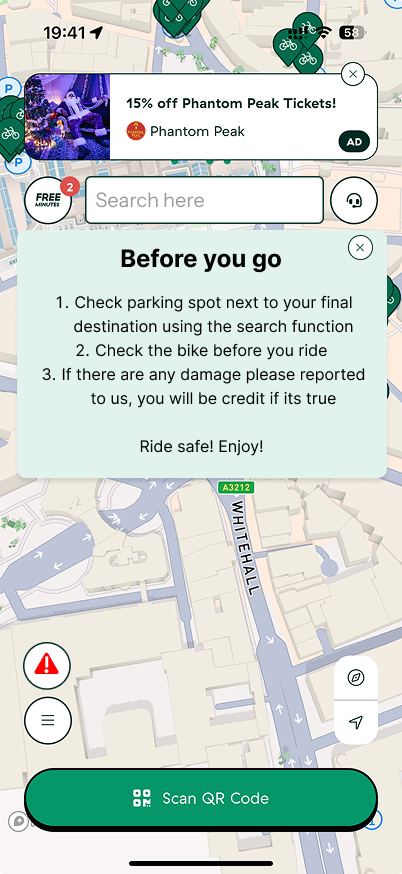
The Issue: Users often rush the start of their ride without checking if their destination has legal parking. This leads to frustration at the end of the journey when they cannot end their ride.
The Solution: I elevated the Search Function to the home screen and added a "Before You Go" checklist. This reminds users to verify their destination's parking rules before they unlock the bike, setting expectations early.
Conclusion
Forest has a great product, but the current "End Ride" flow creates unnecessary stress for users.
By shifting the focus from enforcement (fining users for bad parking) to enablement (helping users park correctly with better GPS tools and clearer instructions), Forest can improve its App Store rating and reduce the burden on its customer support team.