
MAIA Digital
An immersive 3D platform for Exhibition and Events.
Role: Service Design Strategy and User Research
MAIA Digital was an immersive 3D platform built to help artists and galleries survive the Covid lockdown. My focus was on service design strategy and user research to create a sustainable business model. We differentiated the platform by using spatial audio to restore the social connection of gallery opening nights. While the pilot was successful the project ultimately demonstrated how quickly product market fit can change as user demand shifted back to physical spaces once restrictions lifted.

The Problem
With the Covid lockdown, physical exhibitions were cancelled. While some moved online, most were simple 2D websites that forced 3D artists to flatten their work into static images.
This heavily impacted how the audience perceived the art. Furthermore, the social function of opening nights was lost. Critical networking for new artists, curators, and collectors was disrupted or replaced by awkward video calls.
The Solution
We designed a 3D space accessible via standard web browsers to lower the barrier to entry. This allowed users to view works at a 1 to 1 scale, letting artists display their work as intended.
Crucially, we focused on restoring the social ritual of the "Opening Night" by enabling spatial audio. This allowed for natural, small group conversations within the virtual environment, bridging the gap between digital convenience and physical connection.
Service Viability (Revenue)
To ensure the service remained sustainable, we moved away from a rental model. Instead, we designed a commission based model for artwork sales, supplemented by potential sponsorship for hosting third party events.
Market Intelligence
Financial Landscape
Our research highlighted that physical galleries spend over 40% of their exhibition budget on insurance and logistics. By digitising the venue, we swapped high shipping costs for lower digital scanning costs, significantly reducing the financial barrier for artists.
Market Trends
At the time of launch in November 2020, traffic to virtual platforms was surging. Our demographic analysis showed a primary audience aged 25 to 34, with a gender balance near 50 50. This indicated a digitally native user base ready for a more immersive experience.
Market Intelligence
Financial Landscape
Our research highlighted that physical galleries spend over 40% of their exhibition budget on insurance and logistics. By digitising the venue, we swapped high shipping costs for lower digital scanning costs, significantly reducing the financial barrier for artists.
Market Trends
At the time of launch in November 2020, traffic to virtual platforms was surging. Our demographic analysis showed a primary audience aged 25 to 34, with a gender balance near 50 50. This indicated a digitally native user base ready for a more immersive experience.


User research - Artists
Motivation:
They needed to continue exhibiting, selling work, and maintaining visibility with curators during lockdown.
Behaviours:
They relied heavily on social media but lacked a dedicated space for professional feedback.
Needs:
A professional exhibition environment to network and legitimise their work, not just another Instagram feed.
User research - Audience
Motivation:
Enjoying the art atmosphere
Seeking inspiration
Connecting with people
Attending artist talks
Behaviours:
Browsing gallery websites
Attending openings via Zoom
Needs:
A space with high quality artworks
A dedicated online virtual gallery

Business model
After analysing competitors, I found most offered DIY solutions where artists rented digital space. This lacked community and support.
To differentiate MAIA, we pivoted to an event based service model. Instead of selling empty rooms, we curated time specific events. This created scarcity and focused attention, maximising social interaction during the launch window.

User experience
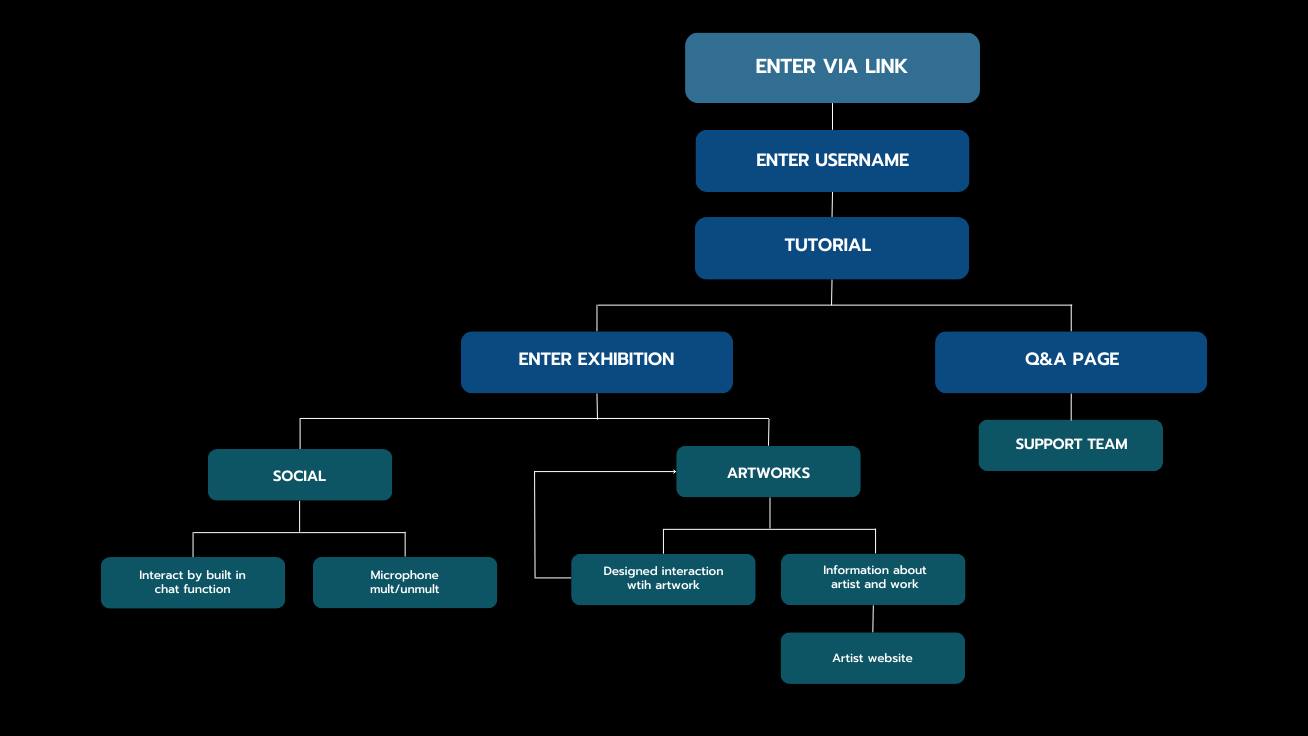
User Flow Map
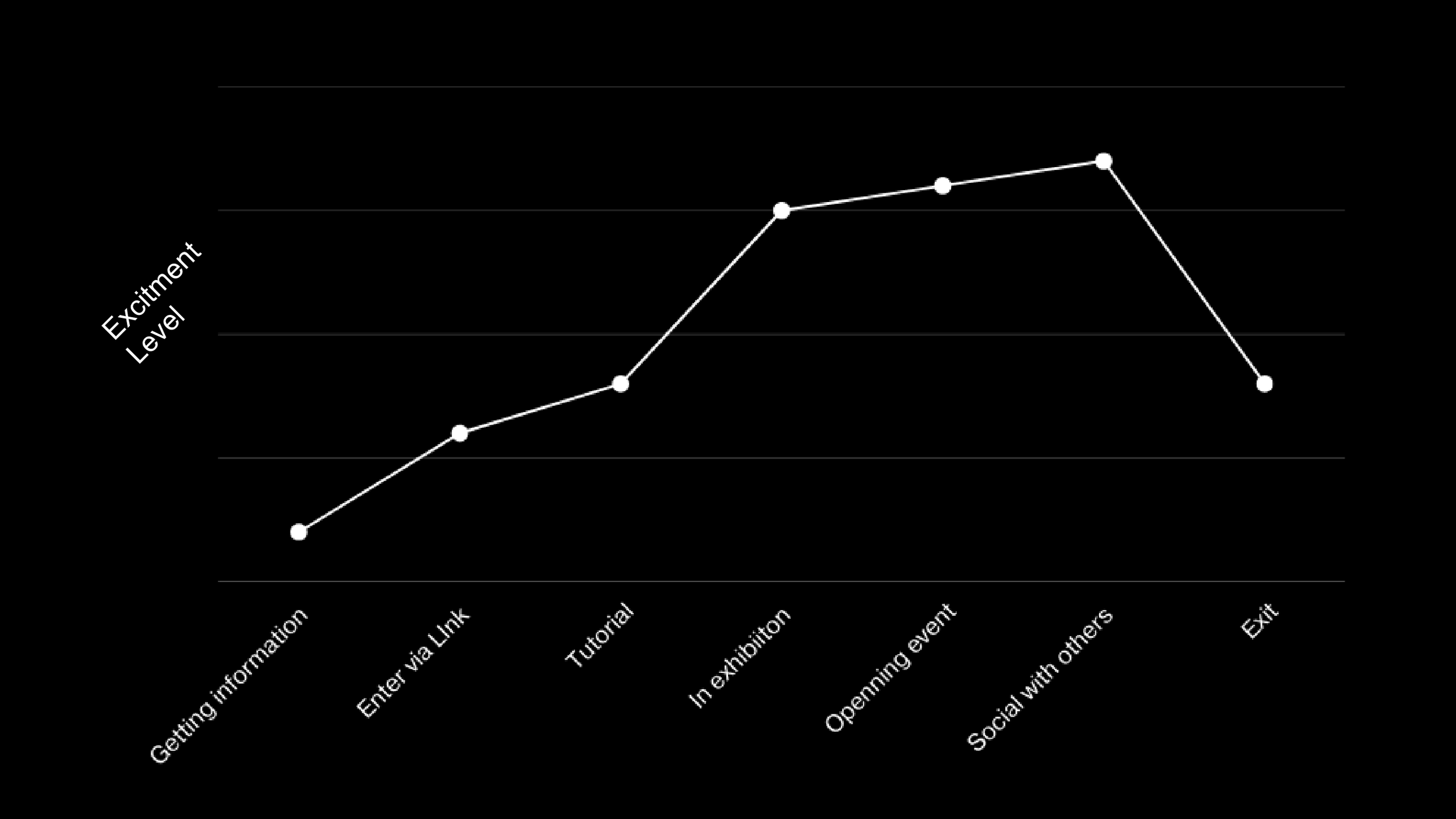
User Journey Map
Mapping the emotional highs and lows of the audience to ensure the opening night excitement was maintained throughout the digital event.
Designed test – Insite
The In-site exhibition served as our live pilot to validate our service assumptions
Viability Results
Testing the event based approach proved successful. The cost per attendee was extremely low. We calculated that a single artwork sale would cover the entire operational cost of the exhibition, validating the financial model.
Experience and Navigation
We encouraged artists to ignore physical laws, resulting in zero gravity displays. While users loved the creativity, we discovered that removing the floor caused navigation sickness for some.
Technical Learnings
The success of the event led to a server overload. While this validated demand, it highlighted the need for a scalable infrastructure for future iterations.


Conclusion and Reflection
Ultimately the startup did not sustain its momentum. By June 2021 as lockdowns were lifted, we observed a rapid shift in user behaviour.
People abandoned online platforms quickly in favour of returning to physical spaces. The unique value we provided during isolation diminished almost overnight. This experience taught me that while a service can be perfectly designed for a specific context, its longevity depends entirely on how well it adapts when that context changes.