PH706 : Immersive Virtual Club
2020
During the Covid 19 lockdown, nightlife and social venues were shut down. While restrictions fluctuated, the clubbing experience—a vital outlet for stress relief and social connection—remained inaccessible.
For our target demographic, daily routines became monotonous and isolation led to a profound desire for escapism. Existing solutions like Zoom parties felt awkward and lacked the sensory immersion of a real event.
We created PH706, an immersive web based virtual club driven by the concept of escapism. It allowed users to break free from their isolation and enter an alternative reality.
Unlike standard video calls, we focused on sensory immersion: multi coloured lighting, bass vibrations, and positional audio to replicate the hypnotic energy of a rave.
Role Creative Director, Visual Design and Platform building & testing.
User Research
Motivation
Forced isolation at home
Lack of nightlife venues
Strong desire to rave and socialise
Behaviours
Attending Zoom parties hosted by DJs
Small group calls on FaceTime
Using VR Chat
Needs
A space that enables genuine social gathering
Ability to handle large crowds while allowing individual engagement
High quality background music and performance
Persona
Profile
Aged 20 to 30. Outgoing personality. Loves raving and social engagement but is currently forced to stay at home.
Technology Level
Comfortable with phones and laptops. Some access to VR headsets.
Frustrations
Existing online parties are too quiet or awkward
Difficulty meeting new people in video grids
Complex software setup creates a barrier to entry
Low immersion leads to short attention spans

Iterative Development
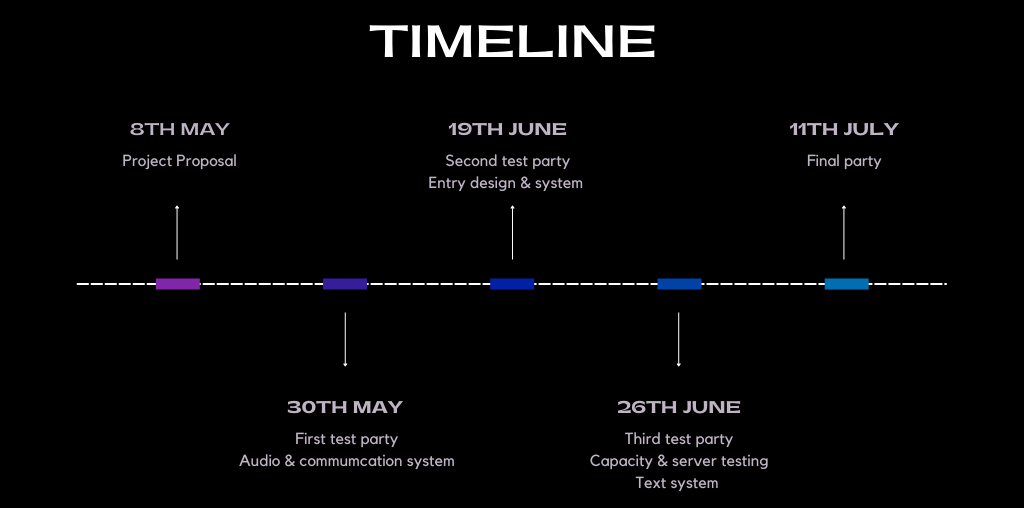
PH706 underwent 5 major iterations.
We treated the platform as a living product. Each iteration tested a different variable:
Server stability for concurrent users
Audio configuration (Positional vs Global)
Spatial design and its influence on user behaviour
UI navigation and interactivity
This testing process allowed us to refine the experience based on real user feedback from live events.


The Experience Design
Access
Users could enter via phone, laptops or VR headsets to ensure maximum accessibility.
Onboarding
To bridge the gap between reality and the virtual world, we used a narrative onboarding video. This set the scene of a "Neo bot" dystopia, helping users mentally transition from their bedroom to the party space.
Interaction
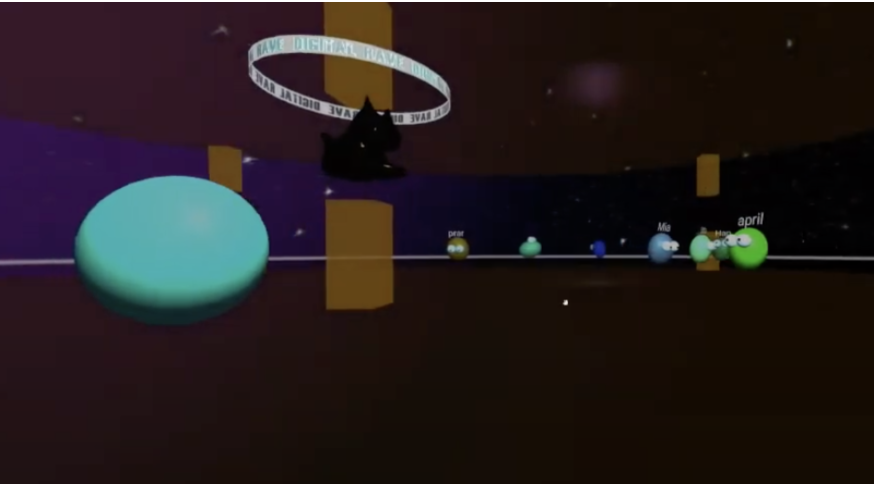
The space utilised positional audio. This was a key UX feature that allowed users to experience music spatially and have natural conversations with others by simply moving closer to them, replicating real world social dynamics.
Impact
My team and I hosted 7 virtual parties on the platform, gathering remarkable feedback and building a recurring community during the lockdown.
Screen recording of the experience, platform made with 3js & A-Frame
Idea & Design
Concept and Visual
The story reflects the real world isolation of the UK lockdown. We used this sci fi narrative to bridge reality and the virtual world, making the experience feel immersive despite being on a 2D screen.
The city design combines neon lighting with complex metallic textures. Inspired by silicon processor dies, the floor uses dark glass with subtle diode underlays to enhance the digital atmosphere.
Production
Most filming was done in Unreal Engine. However, for the container scene, we exported camera movement to Cinema 4D. This hybrid workflow allowed us to render the glass materials with higher fidelity while maintaining the first person perspective.
Video made with Unreal Engine, Substance Painter & Cinema4D (Octane Render)
Story
Set in a neon lit dystopian future, the narrative follows humanoid robots known as Neo bots. They have been isolated in suspension tanks for decades to protect them from a virus causing critical malfunctions.
The experience begins in the year PH706. As the virus declines, the Neo bots break out of their glass confinement to reunite and celebrate their freedom.
Video made with Unreal Engine & Cinema 4D (Octane render)
Post party story
In this final phase, we wanted the audience to carry the feeling of connection back into reality. We recognised the estrangement many felt during the Covid 19 lockdowns, so the off boarding was designed to emphasise unity.
Visually, this section contrasts sharply with the onboarding. We shifted the colour grading and added an old film grain effect to signify that the party had now become a shared piece of history.
The Final party
Conclusion and Reflection
PH706 was a successful experiment in digital empathy. We managed to build a recurring community that relied on the platform for genuine social connection during the height of the lockdown.
This success proved that spatial audio and immersive environments could create genuine human connection. This validation became the foundation for my next venture MAIA Digital. We applied these social mechanics to the art world to solve the problem of lonely online exhibitions and bring the buzz of an opening night into the digital space.